| # Editor Integrations |
| |
| ## VS Code (Official) |
| |
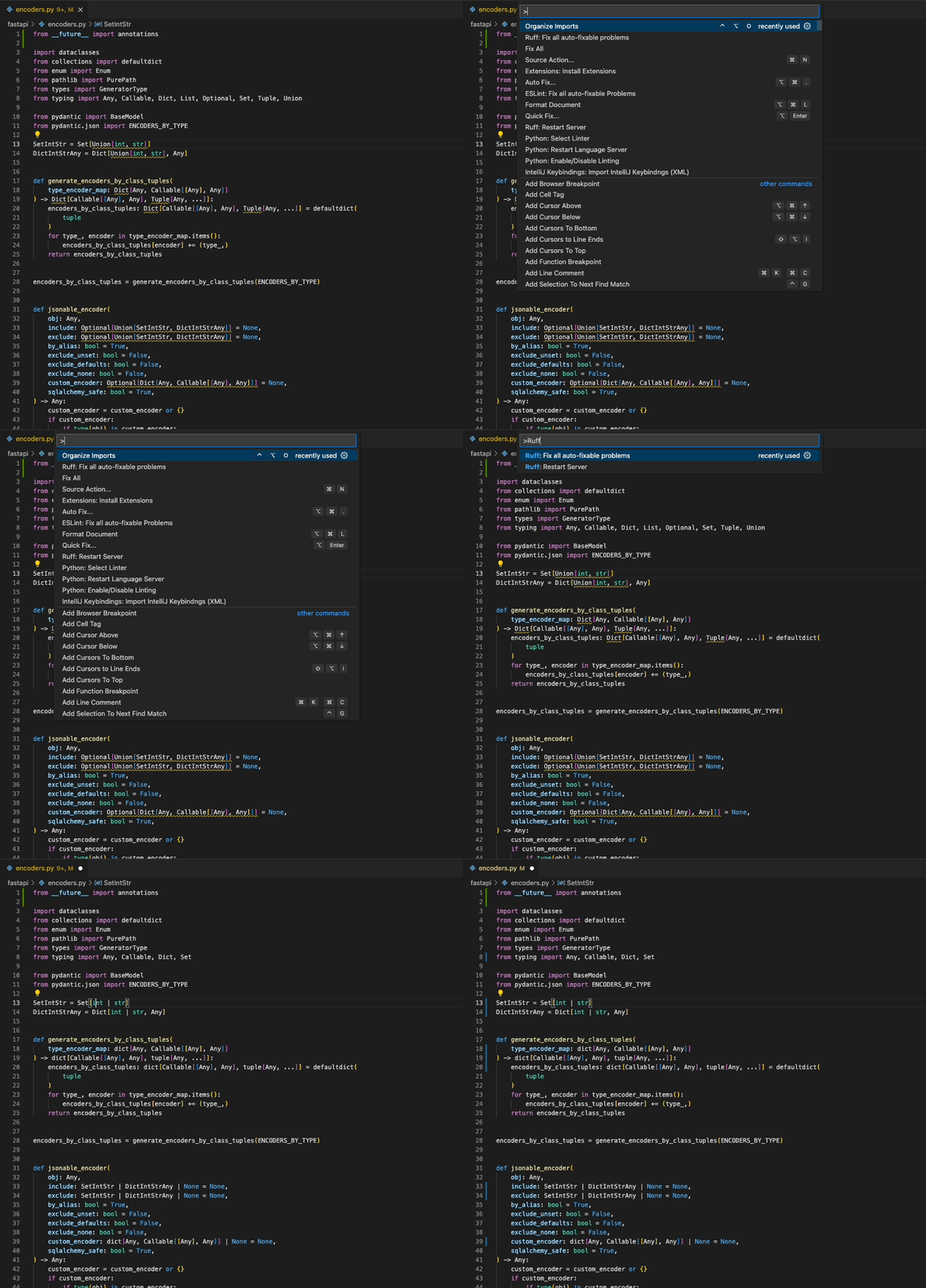
| Download the [Ruff VS Code extension](https://marketplace.visualstudio.com/items?itemName=charliermarsh.ruff), |
| which supports autofix actions, import sorting, and more. |
| |
|  |
| |
| ## Language Server Protocol (Official) |
| |
| Ruff supports the [Language Server Protocol](https://microsoft.github.io/language-server-protocol/) |
| via the [`ruff-lsp`](https://github.com/charliermarsh/ruff-lsp) Python package, available on |
| [PyPI](https://pypi.org/project/ruff-lsp/). |
| |
| [`ruff-lsp`](https://github.com/charliermarsh/ruff-lsp) enables Ruff to be used with any editor that |
| supports the Language Server Protocol, including [Neovim](https://github.com/charliermarsh/ruff-lsp#example-neovim), |
| [Sublime Text](https://github.com/charliermarsh/ruff-lsp#example-sublime-text), Emacs, and more. |
| |
| For example, to use `ruff-lsp` with Neovim, install `ruff-lsp` from PyPI along with |
| [`nvim-lspconfig`](https://github.com/neovim/nvim-lspconfig). Then, add something like the following |
| to your `init.lua`: |
| |
| ```lua |
| -- See: https://github.com/neovim/nvim-lspconfig/tree/54eb2a070a4f389b1be0f98070f81d23e2b1a715#suggested-configuration |
| local opts = { noremap=true, silent=true } |
| vim.keymap.set('n', '<space>e', vim.diagnostic.open_float, opts) |
| vim.keymap.set('n', '[d', vim.diagnostic.goto_prev, opts) |
| vim.keymap.set('n', ']d', vim.diagnostic.goto_next, opts) |
| vim.keymap.set('n', '<space>q', vim.diagnostic.setloclist, opts) |
| |
| -- Use an on_attach function to only map the following keys |
| -- after the language server attaches to the current buffer |
| local on_attach = function(client, bufnr) |
| -- Enable completion triggered by <c-x><c-o> |
| vim.api.nvim_buf_set_option(bufnr, 'omnifunc', 'v:lua.vim.lsp.omnifunc') |
| |
| -- Mappings. |
| -- See `:help vim.lsp.*` for documentation on any of the below functions |
| local bufopts = { noremap=true, silent=true, buffer=bufnr } |
| vim.keymap.set('n', 'gD', vim.lsp.buf.declaration, bufopts) |
| vim.keymap.set('n', 'gd', vim.lsp.buf.definition, bufopts) |
| vim.keymap.set('n', 'K', vim.lsp.buf.hover, bufopts) |
| vim.keymap.set('n', 'gi', vim.lsp.buf.implementation, bufopts) |
| vim.keymap.set('n', '<C-k>', vim.lsp.buf.signature_help, bufopts) |
| vim.keymap.set('n', '<space>wa', vim.lsp.buf.add_workspace_folder, bufopts) |
| vim.keymap.set('n', '<space>wr', vim.lsp.buf.remove_workspace_folder, bufopts) |
| vim.keymap.set('n', '<space>wl', function() |
| print(vim.inspect(vim.lsp.buf.list_workspace_folders())) |
| end, bufopts) |
| vim.keymap.set('n', '<space>D', vim.lsp.buf.type_definition, bufopts) |
| vim.keymap.set('n', '<space>rn', vim.lsp.buf.rename, bufopts) |
| vim.keymap.set('n', '<space>ca', vim.lsp.buf.code_action, bufopts) |
| vim.keymap.set('n', 'gr', vim.lsp.buf.references, bufopts) |
| vim.keymap.set('n', '<space>f', function() vim.lsp.buf.format { async = true } end, bufopts) |
| end |
| |
| -- Configure `ruff-lsp`. |
| local configs = require 'lspconfig.configs' |
| if not configs.ruff_lsp then |
| configs.ruff_lsp = { |
| default_config = { |
| cmd = { 'ruff-lsp' }, |
| filetypes = { 'python' }, |
| root_dir = require('lspconfig').util.find_git_ancestor, |
| init_options = { |
| settings = { |
| args = {} |
| } |
| } |
| } |
| } |
| end |
| require('lspconfig').ruff_lsp.setup { |
| on_attach = on_attach, |
| } |
| ``` |
| |
| Upon successful installation, you should see Ruff's diagnostics surfaced directly in your editor: |
| |
|  |
| |
| To use `ruff-lsp` with other editors, including Sublime Text and Helix, see the [`ruff-lsp` documentation](https://github.com/charliermarsh/ruff-lsp#installation-and-usage). |
| |
| ## Language Server Protocol (Unofficial) |
| |
| Ruff is also available as the [`python-lsp-ruff`](https://github.com/python-lsp/python-lsp-ruff) |
| plugin for [`python-lsp-server`](https://github.com/python-lsp/python-lsp-ruff), both of which are |
| installable from PyPI: |
| |
| ```shell |
| pip install python-lsp-server python-lsp-ruff |
| ``` |
| |
| The LSP server can then be used with any editor that supports the Language Server Protocol. |
| |
| For example, to use `python-lsp-ruff` with Neovim, add something like the following to your |
| `init.lua`: |
| |
| ```lua |
| require'lspconfig'.pylsp.setup { |
| settings = { |
| pylsp = { |
| plugins = { |
| ruff = { |
| enabled = true |
| }, |
| pycodestyle = { |
| enabled = false |
| }, |
| pyflakes = { |
| enabled = false |
| }, |
| mccabe = { |
| enabled = false |
| } |
| } |
| } |
| }, |
| } |
| ``` |
| |
| ## Vim & Neovim |
| |
| Ruff can be integrated into any editor that supports the Language Server Protocol via [`ruff-lsp`](https://github.com/charliermarsh/ruff-lsp) |
| (see: [Language Server Protocol](#language-server-protocol-official)), including Vim and Neovim. |
| |
| It's recommended that you use [`ruff-lsp`](https://github.com/charliermarsh/ruff-lsp), the |
| officially supported LSP server for Ruff. |
| |
| However, Ruff is also available as part of the [coc-pyright](https://github.com/fannheyward/coc-pyright) |
| extension for `coc.nvim`. |
| |
| <details> |
| <summary>With the <a href="https://github.com/dense-analysis/ale">ALE</a> plugin for (Neo)Vim.</summary> |
| |
| ```vim |
| let g:ale_linters = { "python": ["ruff"] } |
| let g:ale_fixers = { |
| \ "python": ["black", "ruff"], |
| \} |
| ``` |
| |
| </details> |
| |
| <details> |
| <summary>Ruff can also be integrated via <a href="https://github.com/neovim/nvim-lspconfig/blob/master/doc/server_configurations.md#efm"><code>efm</code></a> in just a <a href="https://github.com/JafarAbdi/myconfigs/blob/6f0b6b2450e92ec8fc50422928cd22005b919110/efm-langserver/config.yaml#L14-L20">few lines</a>.</summary> |
| <br> |
| |
| ```yaml |
| tools: |
| python-ruff: &python-ruff |
| lint-command: "ruff check --config ~/myconfigs/linters/ruff.toml --quiet ${INPUT}" |
| lint-stdin: true |
| lint-formats: |
| - "%f:%l:%c: %m" |
| format-command: "ruff check --stdin-filename ${INPUT} --config ~/myconfigs/linters/ruff.toml --fix --exit-zero --quiet -" |
| format-stdin: true |
| ``` |
| |
| </details> |
| |
| <details> |
| <summary>For neovim users using <a href="https://github.com/jose-elias-alvarez/null-ls.nvim"><code>null-ls</code></a>, Ruff is already <a href="https://github.com/jose-elias-alvarez/null-ls.nvim">integrated</a>.</summary> |
| <br> |
| |
| ```lua |
| local null_ls = require("null-ls") |
| |
| null_ls.setup({ |
| sources = { |
| null_ls.builtins.formatting.ruff, |
| null_ls.builtins.diagnostics.ruff, |
| } |
| }) |
| ``` |
| |
| </details> |
| |
| ## PyCharm (External Tool) |
| |
| Ruff can be installed as an [External Tool](https://www.jetbrains.com/help/pycharm/configuring-third-party-tools.html) |
| in PyCharm. Open the Preferences pane, then navigate to "Tools", then "External Tools". From there, |
| add a new tool with the following configuration: |
| |
|  |
| |
| Ruff should then appear as a runnable action: |
| |
|  |
| |
| ## PyCharm (Unofficial) |
| |
| Ruff is also available as the [Ruff](https://plugins.jetbrains.com/plugin/20574-ruff) plugin on the |
| IntelliJ Marketplace (maintained by @koxudaxi). |
| |
| ## TextMate (Unofficial) |
| |
| Ruff is also available via the [`textmate2-ruff-linter`](https://github.com/vigo/textmate2-ruff-linter) |
| bundle for TextMate. |
| |
| ## GitHub Actions |
| |
| GitHub Actions has everything you need to run Ruff out-of-the-box: |
| |
| ```yaml |
| name: CI |
| on: push |
| jobs: |
| build: |
| runs-on: ubuntu-latest |
| steps: |
| - uses: actions/checkout@v3 |
| - name: Install Python |
| uses: actions/setup-python@v4 |
| with: |
| python-version: "3.11" |
| - name: Install dependencies |
| run: | |
| python -m pip install --upgrade pip |
| pip install ruff |
| # Include `--format=github` to enable automatic inline annotations. |
| - name: Run Ruff |
| run: ruff check --format=github . |
| ``` |
